10-Minute Catification Challenge: Easy DIY Projects for a Happier Cat
You spent big money on a sleek new cat tree, but your cat spent the next three weeks sleeping in its cardboard box.
It may be a running joke among cat parents, but it highlights a truth about feline preferences: Cats care little about price tags or aesthetics. They care immensely about safety, vantage points, and predictable comfort.
To make your home a safe and cozy paradise with lots of vantage points for your cat, you don’t need a massive budget or to break out the power tools. You can improve your cat's quality of life using items you already own.
Catification Provides Basic Needs
Cats are unique because they are both predators and prey animals. This dual nature–needing to see potential prey and avoiding being eaten–drives their behavior. A cat requires both elevated spots and hiding spots. And of course, both should be cozy for resting.
Elevated spots allow the cat to survey their territory for threats or prey from a position of control and safety. Hiding spots allow a cat to disappear when environmental stress (like a loud vacuum or an unfamiliar guest) gets too high. And safety combined with coziness allows them to lower their guard, conserve body heat, and sleep deeply without feeling vulnerable.
When a home doesn’t provide elevated and hiding spots, stress can manifest as behavioral issues like scratching furniture, urine marking, or friction with other pets or people in the household. Stress can also manifest as a health issue, requiring vet visits. This makes catifying your house a part of responsible pet ownership.
Elevated and hiding spots should be available in or very near all the rooms your cat spends time in, and if there are multiple cats in a household, there should always be at least one option per cat plus one. So, if there are 3 cats in the house, there should be at least 4 hiding spots available.
Your cat should be able to easily and safely access elevated spots. They must also be able to easily get down from those spots. And while some cats will prize the top of the tallest bookshelf as the best elevated spot in the house, many will be content with the back of a couch. And for your older cats, it is much easier to access. You can make it more inviting by adding a folded up blanket that they can rest on.
7 Easy DIY Possibilities
Try one or more of these quick DIY tricks using things you already have around the house for instant catification.
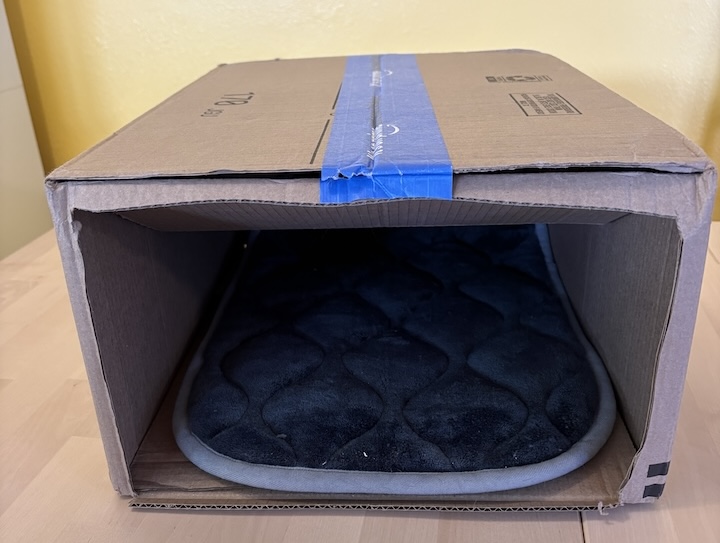
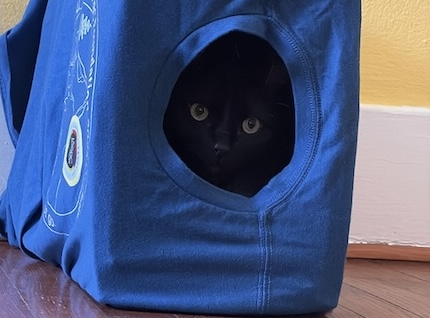
T-Shirt Box (Cozy Hiding Spot): Place a folded towel inside an ordinary medium cardboard box. Stretch a large t-shirt over the box, lining up the neck hole with the open side of the box. The neck hole becomes a perfectly round, fabric-rimmed door, and the rest of the shirt creates a dark, secure cave. Slide the box into a quiet corner or place on a dresser top.
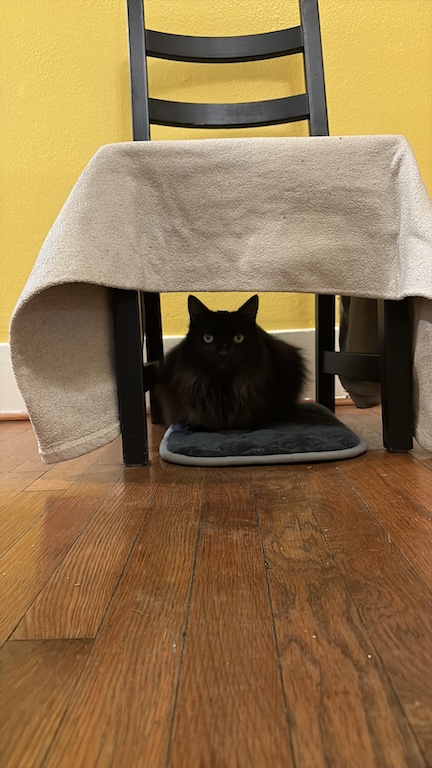
Towel-Draped Chair Fort (Cozy Hiding Spot): Drape a large bath towel or a folded blanket over the seat or horizontal rungs of a four-legged chair, leaving just a small gap at the bottom. Place a folded blanket underneath the chair. Instantly, you’ve created an isolated, low-stress bunker where they can look out, but no one can see in.
Window-Sill Extender (Elevated Spot): Many modern windowsills are far too narrow for a cat to comfortably lounge on. Take a sturdy, flat-topped piece of furniture—like a bookshelf, chest, or dresser—and push it flush against a window. Lay down a non-slip towel or blanket on top for a comfy elevated bird-watching zone.
Desk-Chair Hammock (Cozy Hiding Spot): If you have a sturdy kitchen chair or desk chair with horizontal structural rungs underneath the seat, take a durable towel or fleece blanket. Securely tie the four corners around the four legs underneath the seat to create a low-slung, suspended hammock that lets your cat sleep inches away from your feet while you work, feeling cocooned and protected.
Destination Refrigerator (Elevated Spot): The top of the fridge is a natural feline magnet because it’s high up and radiates gentle heat from the compressor. Clear off the cereal boxes and clutter. Top the fridge with a cheap yoga mat or a non-slip rug, and ensure they have a clear means (like a nearby kitchen counter or chair) to safely and easily get up there and get back down.
Blanket-Covered Tree Fort (Elevated and Cozy Hiding Spots): You probably already have a cat tree, so give it some novelty by covering it with a blanket. Now it’s got new hiding spots, and the blanket can offer superior coziness.
Open Box or Paper Bag (Cozy Hiding Spot): It’s no secret most cats can’t resist an open bag or box. Work with your cat’s natural urges and let them enjoy that box from your latest delivery or the paper bag from your grocery haul. Add a folded up blanket to make resting there cozier. And if your cat particularly likes the box or bag, you can even move it around the house over several days and let them enjoy it in different rooms.
Encourage Use of Improvised Spots
It can be frustrating to put effort into setting up a new spot, only to watch your cat ignore it. Don't panic, and don't tear it down just yet. Cats can be suspicious of changes in their environment, but there are some things you can do to help your cat realize their new setup is safe.
Use Their Own Scent: While DIY items already smell like home, you can make a new spot irresistible by moving an item your cat already loves sleeping on—like a blanket or small cat bed— into the new space. Their own familiar scent serves as an open invitation.
Treat and Catnip Trail: Drop a few high-value treats or a pinch of fresh catnip right at the entrance of the new hiding spot, and a few more inside. For elevated spots, guide their exploration by placing a treat on each step leading up to the platform.
Interactive Play: Use a wand toy to lure your cat near the new setup during your next play session. Let the toy “hide” behind the blanket fort or pop out of the t-shirt box’s neck hole. Getting them to interact with the space during play builds positive associations with the item.
Bring in the Pheromones: Spritz the set-up with a little Feliway, which is a pheromone product that many cats find comforting. Or when your cat is already feeling happy and content, gently rub a clean sock or wash cloth against her cheek a couple of times to gather your cat’s own happy pheromones and place that fabric in your new DIY spot.
Placement Matters: Putting the t-shirt-covered box on the floor right next to the litter box probably isn’t going to prompt your cat to spend a lot of time in there. But move it to a location where you’ve previously seen your cat napping and they are more likely to be interested in the new napping zone.
The Gift of Time: Above all, be patient. It can take days, or even weeks, for a cat to accept a new environmental feature. Leave the setup alone and let them discover it on their own terms when the house is quiet.
DIY Is Practical & Responsible
Choosing to improvise elevated and cozy hiding spots using everyday household items isn't just budget friendly. It offers a way to care for your cat that respects your cat’s sense of smell, reduces guilt about the use of resources (particularly if they don’t like something), and allows you to tailor spots to your cat’s preferences.
Brand new, store-bought cat trees may smell like factories, synthetics, and flame retardants to your cat’s highly sensitive nose, and this unfamiliar chemical signature can range from off-putting to threatening. DIY solutions use blankets, towels, and clothes that already smell heavily like you and your home, so it’s immediately comforting.
Every cat has its own environmental preferences. When you improvise hiding spots with cardboard, blankets, and chairs, there is no financial ramification if your cat doesn’t like it. If they ignore the fort or t-shirt box, you haven't wasted money. You simply undo the set up, recycle the box, and try a different configuration tomorrow.
Commercial cat gear is one-size-fits-all. DIY allows you to respect your cat's needs. An older, arthritic cat may desperately want an elevated view but can no longer jump four feet in the air. By building your own steps with chairs and dressers, you create ramps tailored to them.
Your Turn
Take 10 minutes to look around your house with a view to testing out one of these set ups. Which one might your cat like best? Now, get to work, and stay pawsome.