My Dog and Her Pals Tested Nearly 2 Dozen Slow Feeders and Food Toys. These Are the Winners.
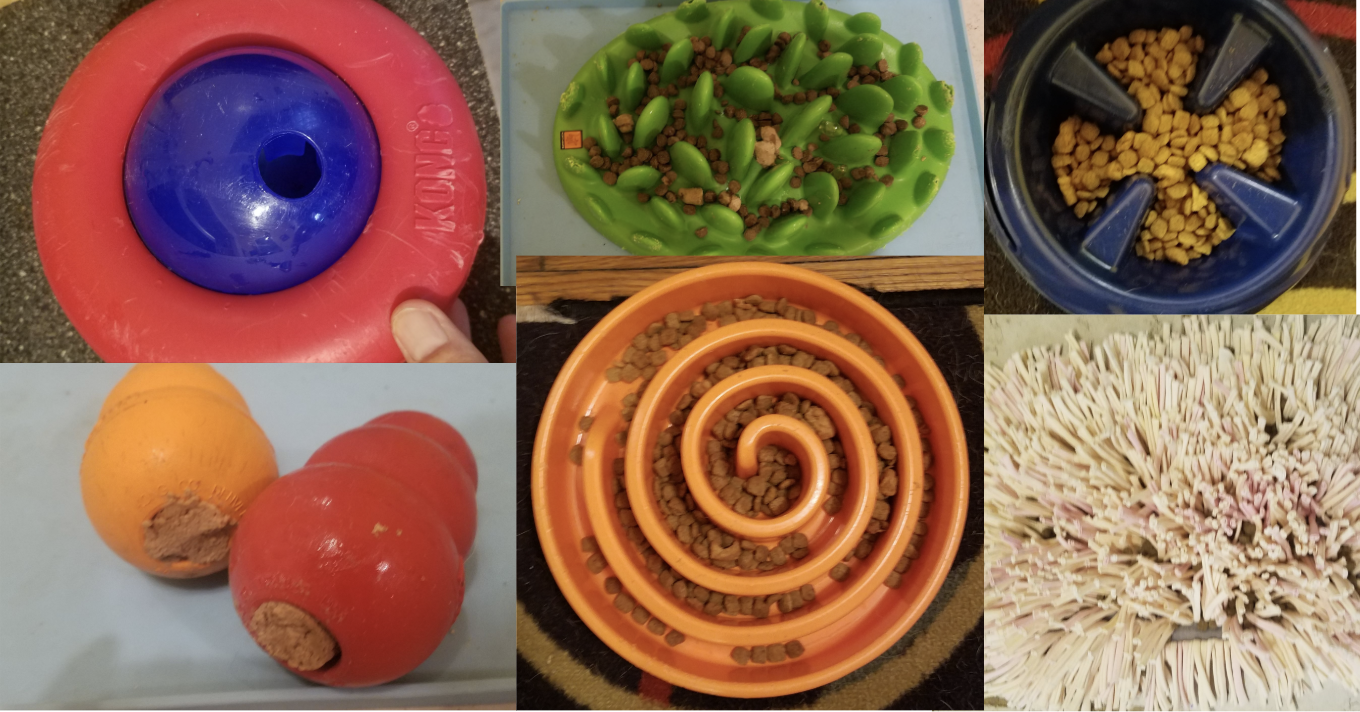
Slow feeders.
Source: J. Pallanich
Most dogs love mealtime but eat way too quickly. Fortunately, there are simple, inexpensive ways you can prolong their meals.
Dogs eat quickly for a variety of reasons, but when they gobble up a whole cup of kibble in 15 or 30 seconds, it can cause health issues. A slow feeder can be the answer, and these genius products offer benefits other than just slowing down how quickly your dog eats.
But there are many designs of slow feeder, which can make it seem like an overwhelming decision of which is best. To figure this out, I had my dog and some of her pals test a bunch of slow feeders, food-dispensing toys and snuffle mats. Some products barely slowed down the meal, making it last about two minutes, while others stretched meal time to more than 20 minutes.
At the end of this post, I’ve listed the results two ways – one in a table format for easy side-by-side comparison and one as a list with in-action videos and results for each item tested.
Side note: there are slow feeders for cats, too. One day I’ll tackle that project.
There are a number of reasons dogs eat quickly, including:
Anxiety
Boredom
Habit
Hunger
Nutrition deficiencies due to parasites or low-quality food
Resource guarding meals against people, dogs or other animals
It’s a good idea to check with your vet if your dog seems to always be starving so the vet can rule in or out a potential medical problem. This is important because if you don’t know that your pup has parasites, slowing down how quickly he eats may minimize the chance for vomiting or gagging or bloat, but isn’t going to help the underlying medical problem.
Eating quickly isn’t great for them, nor is eating quickly great for us.
Quick eating can cause:
Bloat
Gagging
Gas
Vomiting
Bloat can be fatal. This happens when dogs inhale their food so fast that their stomachs twist, slowing or stopping blood flow to internal organs combined with gas build up. In dogs, this is called bloat, formally known as gastric dilatation and volvulus. Symptoms include distended abdomen, trouble breathing, drooling, sounds of pain and dry heaving after eating. If these symptoms are present, see a vet immediately. Deep-chested breeds are most at risk for bloat, but any dog who eats too quickly can die from it. When eating less slowly, dogs are less likely to inhale a lot of air, which can cause buildup of gas that can lead to bloat.
Gagging and vomiting are dangerous as over time these can damage the esophagus and throat. When eating more slowly, they are less likely to gag or vomit.
Gas is just noxious. When dogs eat more slowly, they inhale less air. Your dog will feel better, and you have cleaner air to breathe!
So how can a pet parent slow down the rate at which dogs eat?
Enter the slow feeder, food-dispensing toy and snuffle mat, which all offer a host of benefits beyond the potential to save your dog’s life by minimizing the chances for bloat to strike.
They make your dog think, so they can figure out how to get the food. Problem-solving can be good for your dog, helping build confidence. Making dogs think has the added benefit of also helping make them tired. When they rest, you get to rest!
These items also stretch out mealtime, meaning less boredom. And less boredom means fewer boredom-related behaviors like barking and chewing.
Even if your dog doesn’t inhale meals, a slow feeder can still bring variety and interest to meal time. Think about it. Dogs frequently get the exact same meal twice a day for their entire lives. Why not mix it up a bit by using a different means of delivering the food?
Different types of slow feeders
Products that can slow down your dog’s meal come in a number of sizes, designs and materials.
Slow feeders
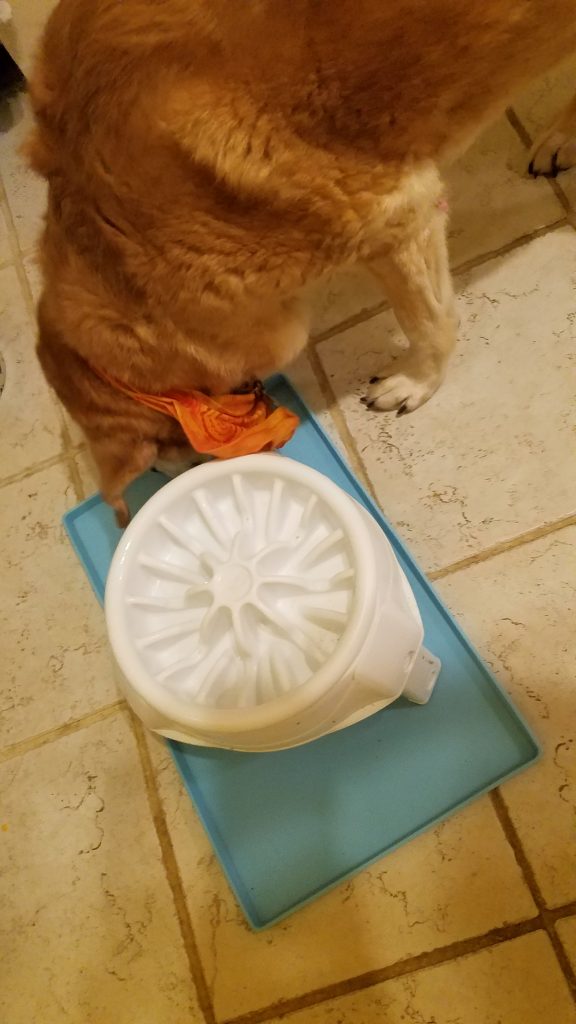
Slow feeder.
Source: J. Pallanich
The first option is a slow feeder. Usually a bowl but sometimes plate-like, these feeders have obstacles that the dog must eat around. They are often made of plastic or melamine, although sometimes you’ll find them of silicone or metal. Most are dishwasher safe, which is awesome, because cleaning them by hand is a pure-d pain in the butt. There’s something about dog saliva combined with all those nooks and crannies created by the obstacles that dish soap has a tough time battling with. (Just be sure to give it a proper rinse before you stick it in the dishwasher or even that thing might not take care of any of the gunk in the crevices your own pup missed.)
Slow feeders are great for:
kibble
kibble + wet
wet
Worth noting is that with some of these slow feeders, Houdini did make a mess around the area while eating her wet food. Using a silicone mat below the slow feeder helped make cleanup a breeze.
Snuffle mats
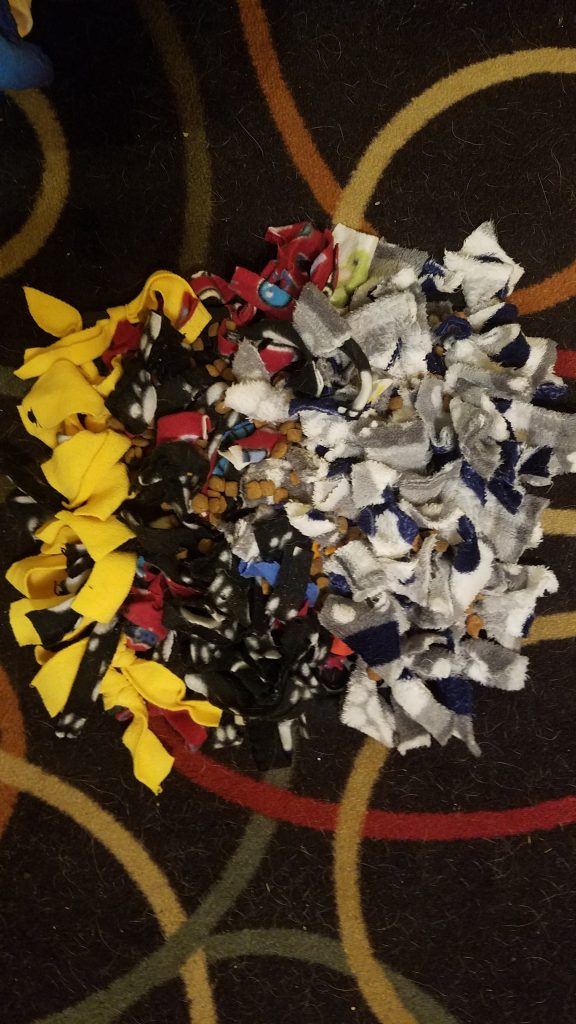
Snuffle mat.
Source: J. Pallanich
Next come snuffle mats. These awesome things hide food, which forces the pup to sniff it out, allowing your pup to act out some of their instinctual sniffing and foraging behaviors. Commercial or home-made, these are made of fabric and are usually machine washable, although most of them should be air-dried to prevent fire hazard and prolong the life of the feeder.
Or, you can take advantage of Mother Nature and turn the grass in your yard into a natural snuffle mat. Another option, if you have a pile of leaves in your yard like I do right now, is to scatter kibble in those leaves to give your pup a fun way to work for her brekkie.
Snuffle mats are most suitable for dry food only.
Food-dispensing toys
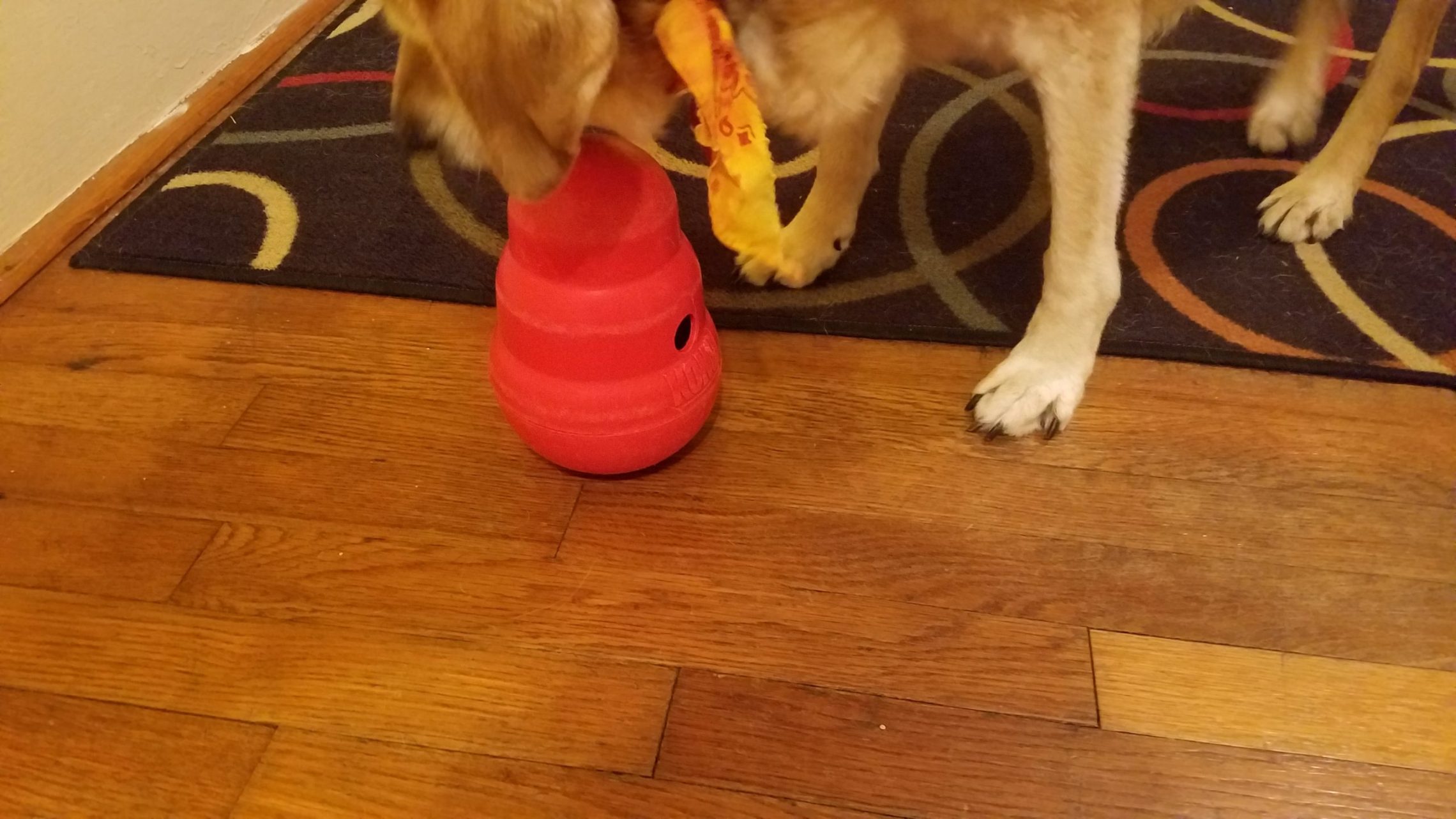
Kong Wobbler is a food-dispensing toy.
Source: J. Pallanich
Puzzle toys are another option when it comes to giving your dog some gustatory enrichment and slowing down how quickly they eat. Puzzle toys are fantastic because they force your dog not just to find the food but to think about how to access the food, and they typically require more physical effort to extract the food from the feeder. Some toys are pretty straightforward and keep your dog engaged with her food for a while, like wobblers, Kongs and the Kong Gyro, and are covered in this post. Others are more involved problem solving feeders, so I’ll save them for a future post. Some of these are suitable for kibble plus wet (like the Kong) but the wobblers and Gyro should be dry food only.
Test method
For these trials, all but a home-made fleece snuffle mat were commercially manufactured. Most of the slow feeders I tested were borrowed from the animal shelter I work with, but a few are items I purchased before I decided to carry out this experiment. Because I borrowed many of these from the shelter, some of the pictures show damage to the slow feeders from chewing by dogs at the shelter. Unfortunately, in a shelter environment, it is not always possible to supervise dogs while they are eating from a slow feeder. Some, out of boredom, gnaw on these items or chew off the rubber bottoms, once the kibble is gone. This can be dangerous, particularly if they ingest any of that rubber or plastic.
It is important to supervise dogs while they are eating, and when you are feeding multiple dogs at the same time, to feed them separately to prevent or minimize the potential for food-related squabbles. And when dogs have finished their meals, be sure to lift the slow feeders so they don’t damage them out of boredom later in the day.
As you will see, there are a number of slow feeder styles to pick from. Slow feeders typically cost $10-$25, but some are cheaper, while quality snuffle mats tend to be more expensive.
These trials are not precisely scientific. As in, I used a similar quantity of food for each trial. This was:
about 1.5 c of wet Honest Kitchen for Houdini
about 1 c of kibble for Houdini, Harry, Sophie
about 1.25 c of kibble + wet for Houdini
I also didn’t use a stop watch. To determine how long each item took, I snapped a picture of it full right before the dog started eating, took pix and vidz while the dog was eating, and a snap when the dog was done, then did some minor math to determine how many minutes had elapsed between the start and end of the meal based on when the pix were taken.
Testers were:
Houdini, a 45-pound 14-year-old lab mix, a quick eater
Harry, a 25-pound 5-year-old spaniel mix, a very quick eater
Sophie, a 45-pound 12-year-old mix, a leisurely eater who doesn’t always finish her meal
No manufacturer supplied these feeders for assessment. They are items I had access to through the shelter or purchased on my own before this project even occurred to me. None of the links for the feeders tested below are affiliate links. Please note there are other quality slow feeders out there that I didn’t test for this post. I just used what I had access to from the shelter or slow feeders I purchased before I decided to tackle this project.
Summary of results
Over the course of 5 months, Houdini and frequent guests Harry and Sophie field-tested about two dozen different varieties of slow feeders, snuffle mats and food-dispensing toys, sometimes with wet food (rehydrated Honest Kitchen), sometimes with kibble (varied), sometimes with a mix of kibble mixed with wet.
What did I learn?
First, if your pooch doesn’t inhale her brekkie or gives up easily, very difficult slow feeders may frustrate her. Here, I’m speaking specifically about Sophie, who tends to be quite leisurely with her meals. She simply walked away from one of the slow feeders.
Second, wet food usually took Houdini longer to eat out of the slow feeders than kibble did. Kibble plus wet typically took more time than kibble alone and less than wet only, but not always. Sadly, neither Harry nor Sophie eats wet food, so my conclusions here are drawn from only one dog’s experiences across a spectrum of feeders.
Harry the food inhaler was barely slowed down by most of the slow feeders. This could be due to the fact that kibble is simply easier to get out of the slow feeders. Most slow feeders took him between 1 and 5 minutes to finish, although the snuffle mat kept him busy for more than 10 minutes.
Third, design matters. Those that are more open are easier for dogs to use and should be used for easily frustrated dogs or those who already eat more slowly. The more angles, the more barriers, and the deeper the wells, the longer it takes, so these are more suitable for those who want to inhale their food.
Fourth, size matters. Here, it’s not just width but also height. Houdini is a medium dog (45 pounds) with a lab-like nose, and the smaller and/or shorter slow feeders took her less time than the larger and/or taller ones. I’m guessing this is because her food was spread out over a larger area and she just had to work harder to get it, or in the case of the green grass-like feeder, because she had to stick her tongue way down in to pull up any of the food (although to be fair, that thing has a huge number of obstacles to eat around, so that could be it as well).
Finally, practice may make perfect. The more often a dog is exposed to a specific slow feeder, the more he’ll refine his methods of getting food from the feeder so the more quickly he’ll eat from the feeder.
So, with all that in mind, what slow feeders kept these dogs occupied the longest?
The overall winners for keeping Houdini engaged with wet food were:
the grass-looking slow feeder (11 minutes)
a large slow feeder with a bunch of angles (10 minutes)
the large Brake-fast slow feeder (9 minutes)
the smaller flower-looking feeder (9 minutes)
The overall winners for keeping dogs working for their kibble were:
the Kong Gyro ball (22 minutes)
the Kong Wobbler (21 minutes)
a commercial snuffle mat (18 minutes)
However, other items did break the 10-minute mark for kibble only, including
the large grass-looking slow feeder (14 minutes)
a large spiral slow feeder (12 minutes for Houdini but 9 minutes for Harry)
the home-made snuffle mat (11 minutes for Houdini, 12 minutes for Harry)
the Paw 5 wobbler (10 minutes for Houdini, although Sophie walked away from it as being too frustrating)
The overall winners for making Houdini work for her kibble mixed with wet were:
the Kong (25 minutes; it took two to serve her complete meal, so each one took about a dozen minutes)
a small slow feeder with slats (13 minutes)
the large grass-looking feeder (11 minutes)
small flower-looking slow feeder (9 minutes)
Control group
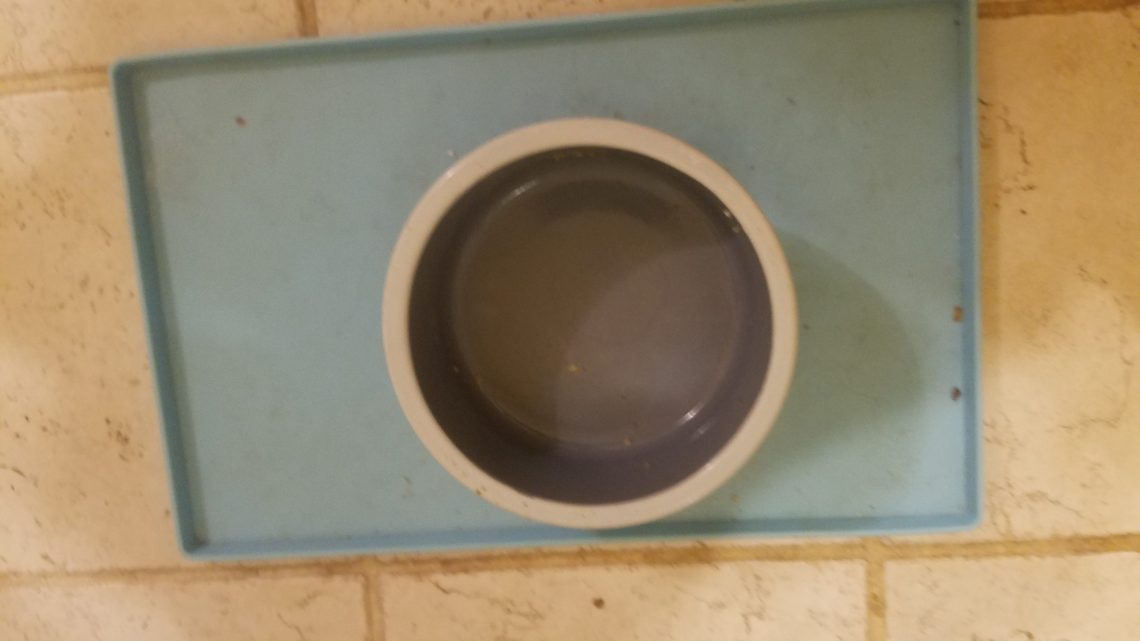
No experiment is complete without a control group. In this case, that was using a plain bowl. Houdini needed 2 minutes to eat her Honest Kitchen wet food, 2 minutes to eat regular kibble and 3 minutes to eat wet mixed with kibble out of a plain bowl. Harry took 2 minutes to eat his kibble from a bowl. Sophie is more leisurely and took 4 minutes to eat her kibble from the bowl.
Test results, table format
In the results below, the number indicates the number of minutes it took the dog to eat the food from that item. NA means not applicable, as in not putting wet food in the Kong Gyro. NT means not tested, for other reasons. Unfortunately, Sophie moved away before I was able to test more items with her, Harry only visits a few times a year, and Houdini crossed the Rainbow Bridge before I was able to complete the slow feeder trials.

Test results, the nitty gritty
In the results below, NA means not applicable, as in I didn’t try wet food in the Kong Gyro. What a mess that would have been! NT means not tested. Unfortunately, Sophie moved away before I was able to test more items with her, Harry only visits a few times a year, and Houdini crossed the Rainbow Bridge before I was able to complete the slow feeder trials.
Houdini + Kongs
Source: J. Pallanich
Plain bowl
Houdini, wet: 2
Houdini, kibble: 2
Houdini, kibble + wet: 3
Harry, kibble: 2
Sophie, kibble: 4
Kong
Houdini, wet: NA
Houdini, kibble: NT
Houdini, kibble + wet: 25
Harry, kibble: NT
Sophie, kibble: NT
Kongs come in many sizes and levels of durability.
Kong Gyro
Houdini, wet: NA
Houdini, kibble: 22
Houdini, kibble + wet: NA
Harry, kibble: NT
Sophie, kibble: NT
Kong Wobbler
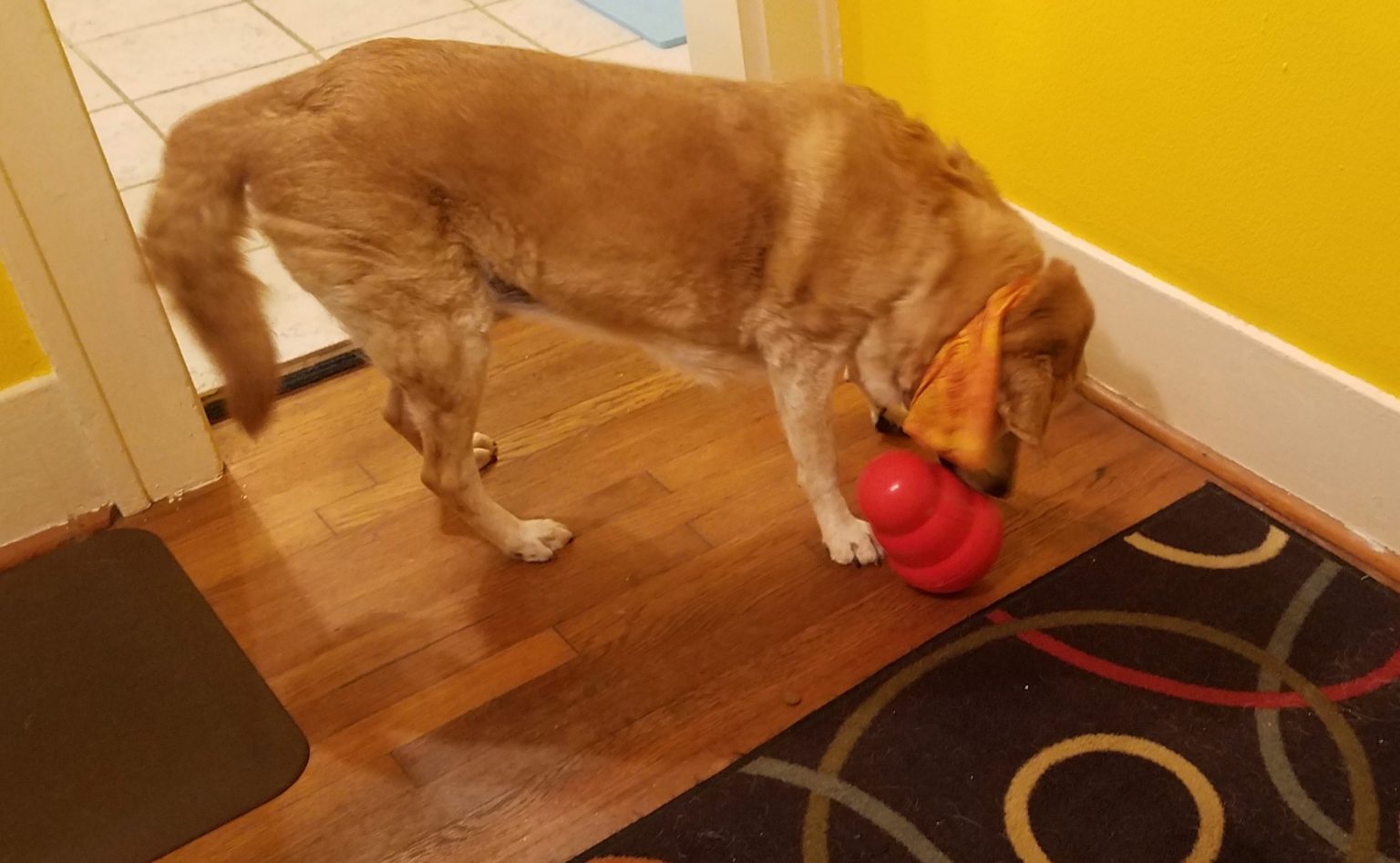
Houdini, wet: NA
Houdini, kibble:21
Houdini, kibble + wet: NA
Harry, kibble: NT
Sophie, kibble: NT
Paw 5 Wobbler
Houdini, wet: NA
Houdini, kibble: 10
Houdini, kibble + wet: NA
Harry, kibble: NT
Sophie, kibble: Gave up, walked away
Large plastic grass
Houdini, wet: 11
Houdini, kibble: 14
Houdini, kibble + wet: 11
Harry, kibble: NT
Sophie, kibble: NT
Large melamine ridges
Houdini, wet: 2
Houdini, kibble: 4
Houdini, kibble + wet: 4
Harry, kibble: 2
Sophie, kibble: NT
Large metal Brake Fast
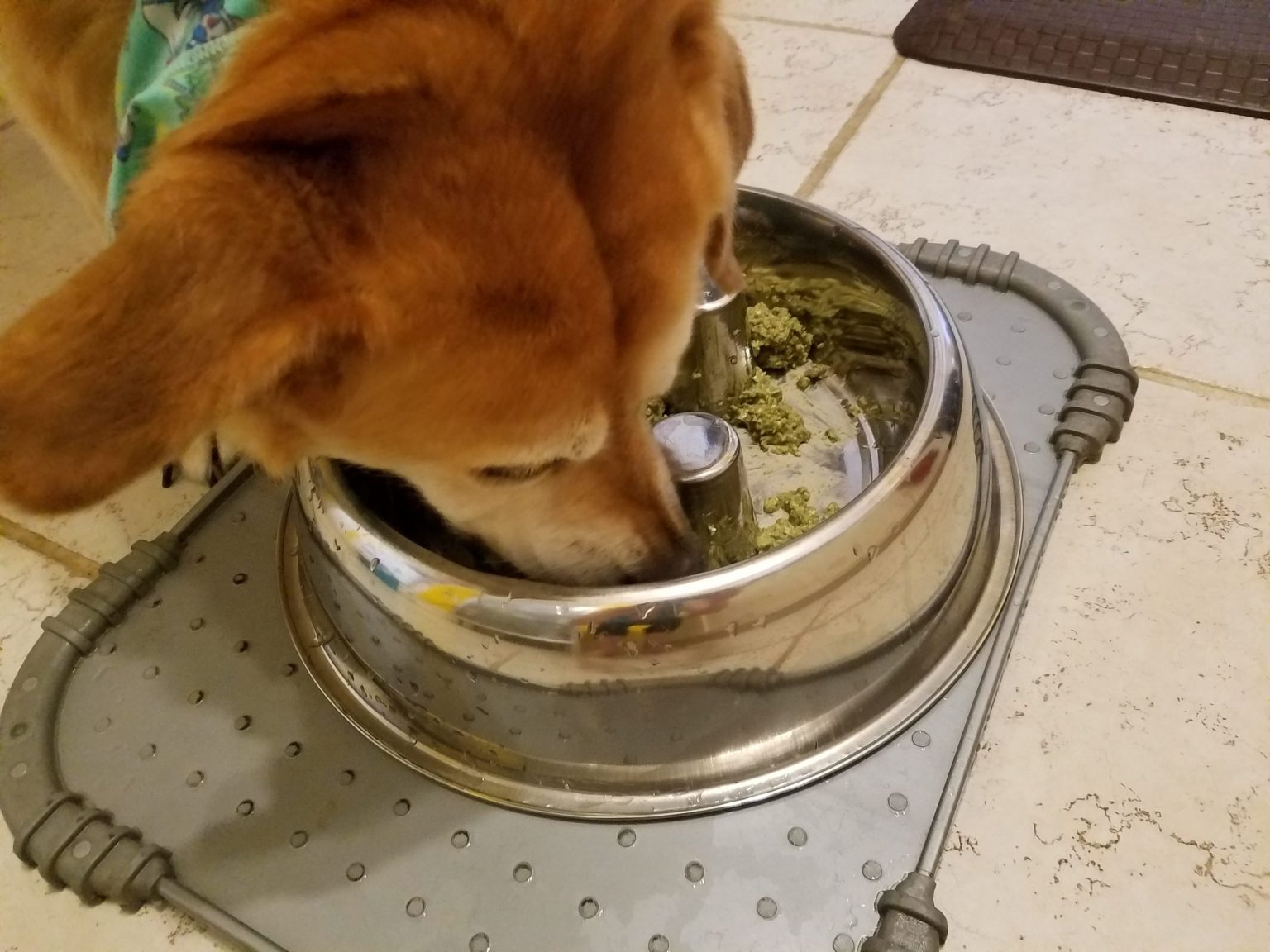
Houdini, wet: 9
Houdini, kibble: 7
Houdini, kibble + wet: NT
Harry, kibble: NT
Sophie, kibble: NT
Large plastic angles
Houdini, wet: 10
Houdini, kibble: 5
Houdini, kibble + wet: 8
Harry, kibble: NT
Sophie, kibble: NT
Large plastic flower
Houdini, wet: 7
Houdini, kibble: 7
Houdini, kibble + wet: 8
Harry, kibble: NT
Sophie, kibble: NT
Large plastic spiral
Houdini, wet: 6
Houdini, kibble: 12
Houdini, kibble + wet: 7
Harry, kibble: 9
Sophie, kibble: NT
Large plastic ridges
Houdini, wet: 5
Houdini, kibble: 2
Houdini, kibble + wet: 7
Harry, kibble: 3
Sophie, kibble: NT
Small metal donut
Houdini, wet: 3
Houdini, kibble: 3
Houdini, kibble + wet: 5
Harry, kibble: NT
Sophie, kibble: NT
Small metal Brake Fast
Houdini, wet: 4
Houdini, kibble: 1
Houdini, kibble + wet: 2
Harry, kibble: 2
Sophie, kibble: NT
Silicone mat low grass
Houdini, wet: 7
Houdini, kibble: 2
Houdini, kibble + wet: 7
Harry, kibble: 2
Sophie, kibble: NT
Small plastic ridges
Houdini, wet: 3
Houdini, kibble: 4
Houdini, kibble + wet: 4
Harry, kibble: 2
Sophie, kibble: NT
Small melamine ridges
Houdini, wet: 2
Houdini, kibble: 1
Houdini, kibble + wet: 4
Harry, kibble: 2
Sophie, kibble: NT
Small melamine petals
Houdini, wet: 3
Houdini, kibble: 3
Houdini, kibble + wet: 2
Harry, kibble: NT
Sophie, kibble: NT
Small low silicone
Houdini, wet: 6
Houdini, kibble: 2
Houdini, kibble + wet: 6
Harry, kibble: 1
Sophie, kibble: 5
Small melamine paw print
Houdini, wet: 8
Houdini, kibble: 6
Houdini, kibble + wet: 3
Harry, kibble: 4
Sophie, kibble: 10, didn’t get all kibbles
Small plastic flower
Houdini, wet: 9
Houdini, kibble: 3
Houdini, kibble + wet: 9
Harry, kibble: 5
Sophie, kibble: NT
Small plastic slats
Houdini, wet: 5
Houdini, kibble: 4
Houdini, kibble + wet: 13
Harry, kibble: 3
Sophie, kibble: 7
Small plastic spiral
Houdini, wet: 6
Houdini, kibble: 3
Houdini, kibble + wet: 8
Harry, kibble: NT
Sophie, kibble: NT
Homemade fleece snuffle mat
Houdini, wet: NA
Houdini, kibble: 11
Houdini, kibble + wet: NA
Harry, kibble: 12
Sophie, kibble: NT
Commercial snuffle mat
Houdini, wet: NA
Houdini, kibble: 18
Houdini, kibble + wet: NA
Harry, kibble: NT
Sophie, kibble: NT
Conclusions & tips
As you can see from the results above, dogs eating out of a plain bowl may finish their meals in three minutes or less. By using well-designed slow feeders, snuffle mats and food-dispensing toys, you may be able to stretch meal times out to 20 minutes or longer.
Not only is that healthier for them, but by providing this mental stimulation you may also decrease certain problem behaviors.
If possible, rotate the slow feeders, dispensing toys and snuffle mats you use to serve meals. This way there’s more variety and your dog will stay on its toes, mentally speaking.
Here’s to serving up meals in a way that makes your pet healthier, a better problem solver and possibly better behaved!