The Nose Knows: Scent Enrichment for Dogs and Cats
Sabrina sniffing silvervine. Scent enrichment can bring fun and interest to your pet’s life.
Source: J. Pallanich/Pawsome Pet Pal
A whiff of coffee, vanilla or roses can affect how a person is feeling. We light scented candles or burn incense to set a mood. Why should humans get all the fun?

Espresso enjoys a catnip-filled kicker toy.
Source: J. Pallanich
Dogs and cats have far more powerful senses of smell than we mere mortals, so maybe it’s time we gave them more things to smell! Providing scent enrichment for your dog or cat will add some variety to their lives, allow them to use their senses to take in novel aromas, and can affect their mood.
Some scents are calming, some have a more stimulating effect, and some scents are just plain novel and interesting. Lavender can be calming for dogs and cats. Pheromone-based Feliway is a commercial product intended to help relieve stress in cats, while Adaptil is a similar product for dogs.
One study on the effects of olfactory stimulation on shelter dogs showed that exposure to coconut, ginger, vanilla and valerian all resulted in calmer behavior by the dogs. (That was one aroma at a time, not a cocktail of all four scents!)
But maybe you want to inject a little excitement into your cat or dog’s life? What might you use instead? Dogs can go crazy for synthetic prey smells, such as the scent of raccoon or rabbit, which can be found online.

Sabrina sniffs a silvervine twig.
Source: J. Pallanich
And many, but not all, cats respond to catnip. About one-third of cats are not genetically predisposed to respond to catnip. The catnip response trait generally emerges between the age of 3 and 6 months. When they do respond to catnip, it can be so much fun to watch! If your cat doesn’t care about catnip, he may like silvervine. About 80% of cats respond to either the fruit galls or the wood of the silver vine plant, and this response can be as entertaining as the response to catnip. Silvervine, a species of kiwifruit, is also known as Actinidia polygama and is native to Asia.
So you’re sold on the idea of bringing scent enrichment into your pet’s life, but not sure where to start? Read on for a range of ideas.
Calming scent enrichment
Feliway mimics cat’s natural facial pheromones and can either be sprayed on an as-needed basis to help reduce stress, or diffused for an around-the-clock helper for stress reduction.
Similarly, Adaptil mimics mother dog’s natural nursing pheromones and can be sprayed when needed or diffused. It is also available in a collar form.
Lavender can also help reduce stress for cats and dogs. One of my friends uses a collar stuffed with dried lavender buds to help keep her dog calm during thunderstorms and fireworks displays, although it could also be used for things like vet visits and other stressful situations. When not in use, the collar stays in a sealed bag to maintain herbal freshness.
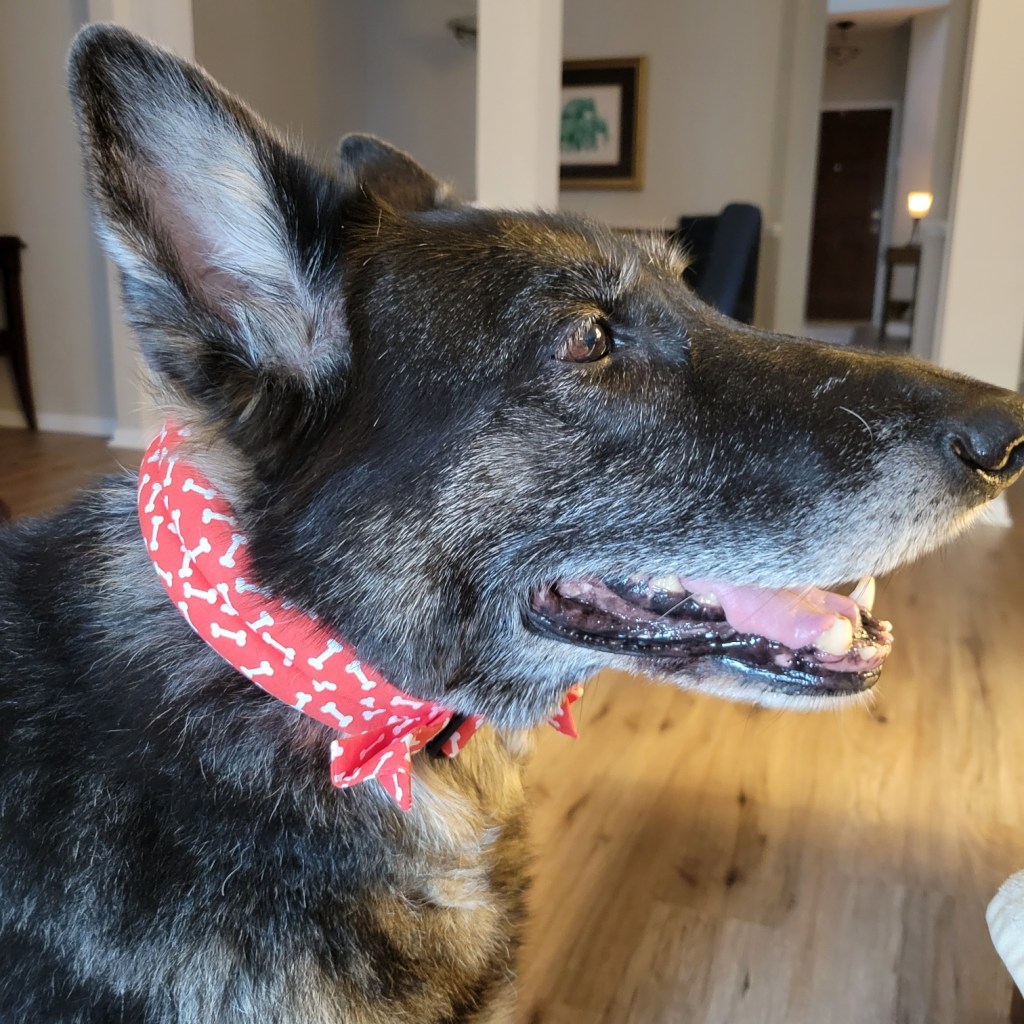
Greta models a collar filled with lavender. It’s from calmingcollars.com.
Source: B. Ireland
At the shelter, we add a couple of drops of lavender essential oil* to a large squirt bottle, shake to mix, squirt the diluted lavender on strips of cloth or paper towel, stuff one strip inside a hollow toy and pass the toy out to one of the dogs.
To try helping calm your pup with coconut or vanilla extracts, try adding a drop or two of coconut or vanilla extract to a tablespoon or two of water. Soak a wash cloth in the scent and place near your dog’s bedding.
Stimulating scent enrichment
Now to the fun stuff!
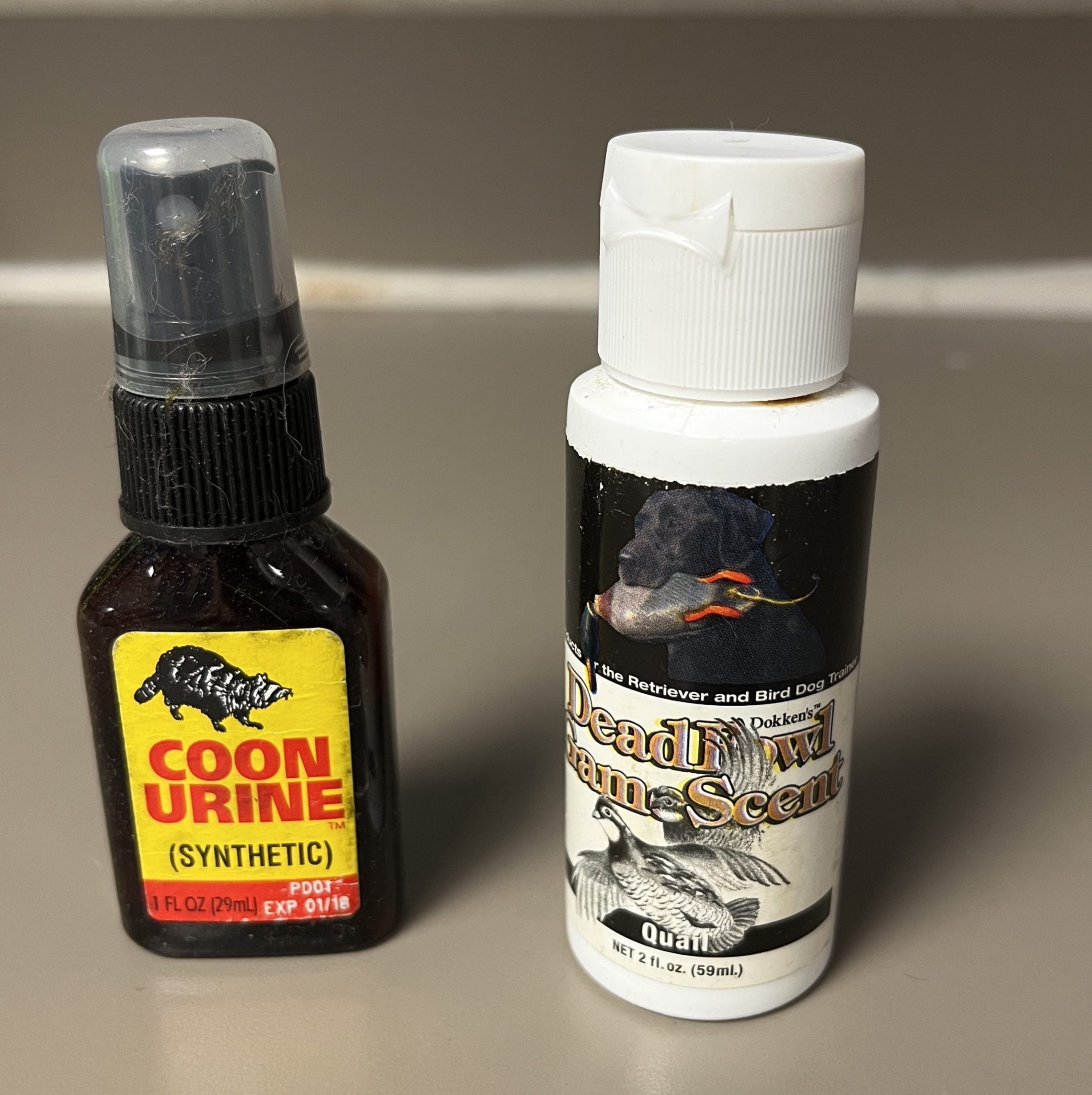
Prey scents: coon urine and dead owl.
Source: J. Pallanich
For dogs at the shelter, we often place prey scents on strips of cloth or paper towel, stuff the strip inside a hollow toy and pass the toy out to one of the dogs. For even more enrichment, try hiding the toy and letting the dog discover it, perhaps in your yard or out on a walk.
I know another shelter adds a drop of prey scent to tennis balls and hides the tennis balls around the campus for different dogs to find while they’re out on walks.
To double up on enrichment – olfactory and gustatory – you can add a drop or two of prey scent to an empty toilet paper tube, crimp one end up, add a few pieces of kibble to the tube and crimp the other end closed. Hide the tube and let your pooch find it and destroy it.
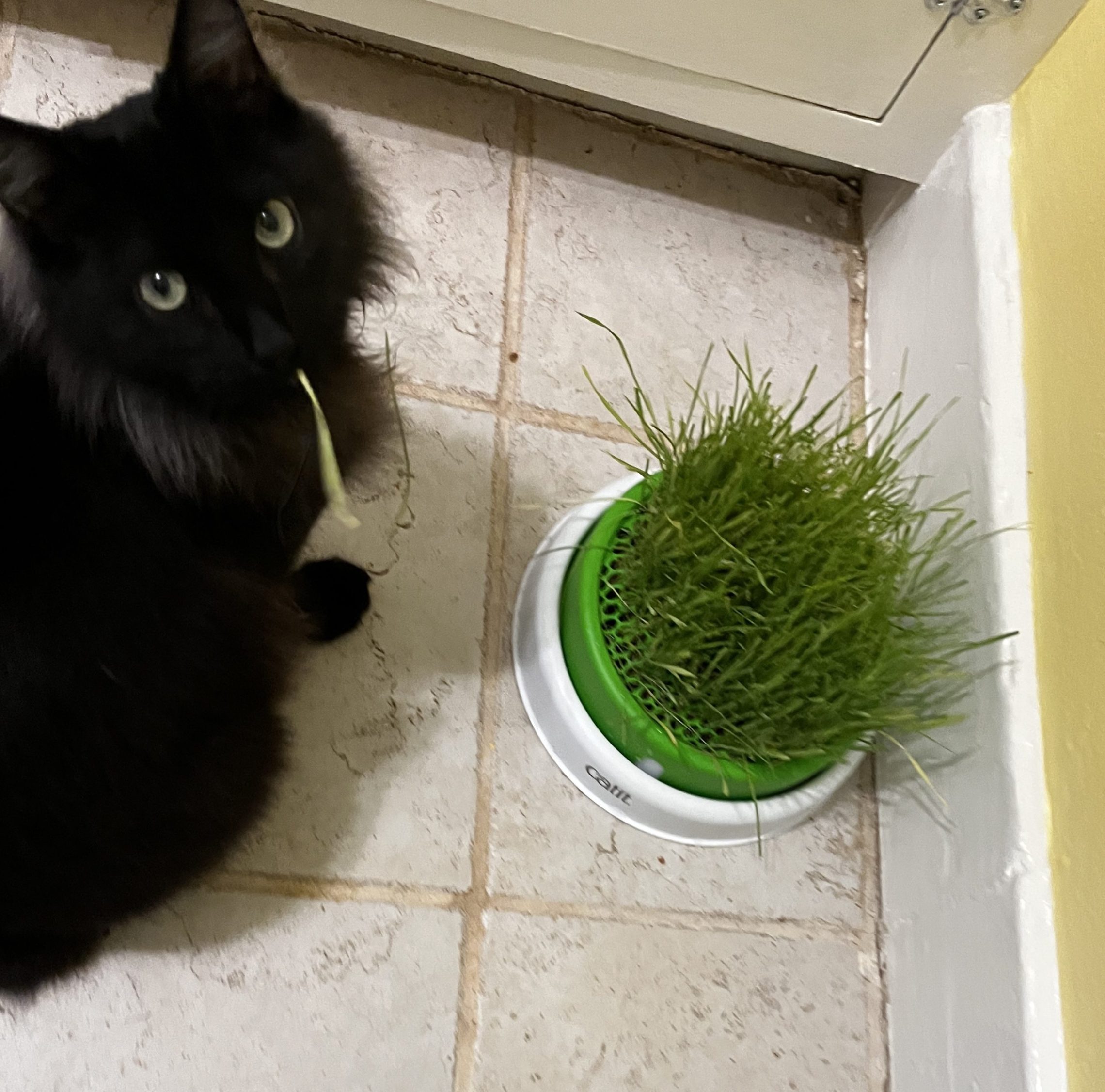
Espresso enjoying cat grass.
Source: J. Pallanich
Cat grass is a great item to offer your four-legged friend. It smells interesting and is safe for your pet.
Catnip comes in a variety of forms. If you’ve got a green thumb, you may already have a catnip plant at your house. See what your cat does when you offer a little of this fresh herb.
Sometimes cats roll in dried catnip sprinkles, and sometimes they eat it. Some nipheads are picky and prefer dried catnip over spray catnip. Some dried catnip is blended with other things, such as silvervine, and a cat who doesn’t respond to catnip only may be more likely to respond when silvervine is included in the mix. To use, grab a handful of the catnip and crush it between your fingers to release more of the aroma before giving to your cat or sprinkling over a toy or scratcher.
At the shelter, we often marinate plush toys in a sealed bag with loose, dried catnip and then pass out catnip toys for cats to play with.
Silvervine fruit galls and twigs can be given to your cat. Alternatively, sprinkle some of the powder on the floor, toys or scratchers.
Novelty scent enrichment
One of the best things you can do for your pet is mix up the scent enrichment game and provide some novelty for them. The more they use their noses, the more engaged they are with their world.
Sniff walks are a favorite way to allow dogs to learn about their environment. On a sniff walk, the dog sets the pace and rhythm of the walk. Usually, as long as where the dog is sniffing is safe (i.e., not investigating something in the middle of the road) and not rude (i.e., causing me to stand in the middle of someone’s yard), I typically allow the dog to do all the sniffing she wants. We may spend 30 minutes just walking around the block, but it’s her walk, not mine.
Sometimes, when I’m cooking, I’ll drop a sprig or two of fresh herbs on the floor for Espresso to investigate. Rosemary and cilantro he quite likes; mint, not so much.
At the shelter, we often use empty boxes or paper bags that formerly contained food for scent enrichment. Sometimes we also add a bit of kibble to the mix, as well.

Sabrina gives my hand a thorough sniff inspection.
Source: J. Pallanich
When you return to your pet, do they often give you a sniff inspection to learn what you’ve been up to? The more interesting you smell, they longer it takes, right? Well, that’s great for them. Espresso gives me more than the normal once over when I come back from the shelter because I smell like many, many different animals then. He has a lot to take in. This is great novelty for him.
Because animal noses are so much keener than ours, it’s important to make sure they get to use them in a variety of ways every day.
Here’s to some happy smelling for your pup or kitty.
* Essential oils should be very diluted before providing to your pets for scent enrichment. Do not apply topically or feed essential oils to your pet. Only a few essential oils, such as lavender and frankincense, are safe for dogs and cats, and only in minute amounts. If in doubt, check with your vet.